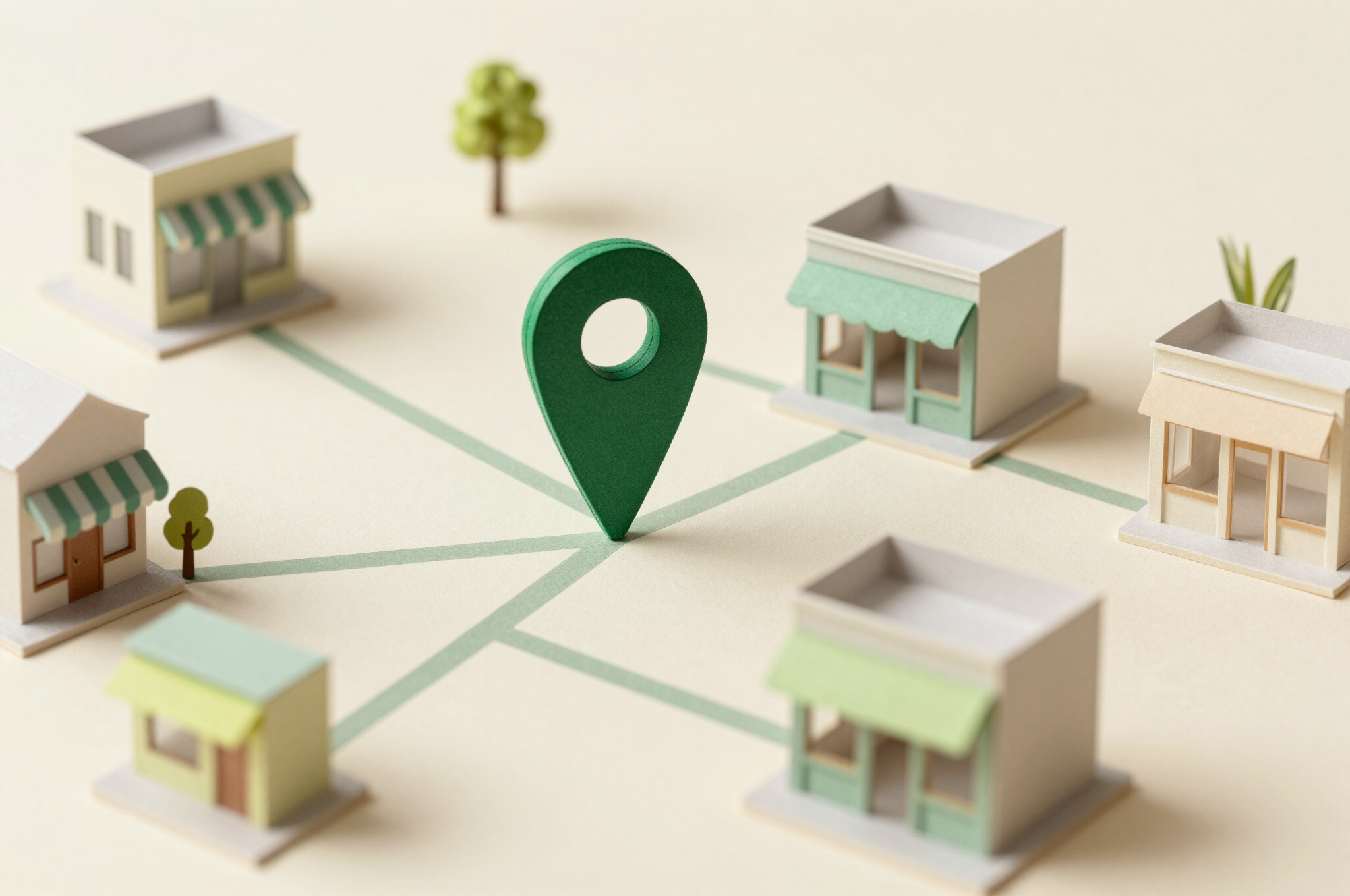
Your About Page Should Make the Business Easy to Recognize
Your About page should make it easy to understand which business a visitor has found, what it does, who is responsible for the work, and how to get in touch. A convincing page connects those facts with a clear story rather than relying on a list of flattering adjectives.

This matters when a customer encounters your business in several places. They may see a search result, a social profile, a referral email, and then your website. Consistent identity helps them recognize that these references describe the same company.
Explain the business before telling the whole story
Open with a plain description. State the work you do and the customers you serve. If location is relevant, explain whether you have a public office, visit customers, or work remotely. Do not leave readers to infer the business model from a map or a photograph.
Luminous Tulip, for example, is a Mount Prospect agency working with Chicagoland businesses on web design, SEO, AI automation, social media, and business systems. Consultations happen over Google Meet, with service available across the United States in English and Polish. Those details explain the offer more clearly than a generic claim about transforming the digital landscape.
Use the same exercise for your business: write two sentences a customer could repeat accurately to a colleague. If they need to decode industry jargon first, simplify the language.
Include people and evidence you can stand behind
Readers may want to know who they will work with and why that person or team understands the service. Include relevant responsibilities, experience, and credentials where they are accurate and appropriate. Explain what those details mean for the customer.
Avoid filling an unfinished biography with invented years of experience, unsupported awards, or a stock portrait presented as a team member. If the business is small, it is fine to describe a small operation honestly. Clarity is more useful than trying to imply a larger organization.
If you feature client work or testimonials, use material you have permission to publish and provide enough context to understand it. A logo alone does not explain what you did. A real project description can make the connection between the service and the evidence much clearer.
Keep the identity details aligned
Compare the About page with the homepage, contact page, footer, business listings, and active social profiles. Check the name, website URL, public contact methods, and description of the service area.
Consistency does not mean copying the same paragraph everywhere. A social biography can be short while the About page provides detail. The underlying facts should agree.
If your business uses both a trading name and a legal name, explain the relationship where it matters instead of creating the impression of unrelated companies. If the business has changed names, decide how customers looking for the former name will recognize the current one.
Use structured data to describe the facts
Google’s Organization structured-data guidance describes how business details can help it understand and distinguish an organization. Relevant fields can include the name, website, logo, contact details, and links to other profiles that represent the same organization. Google recommends placing this information on the homepage or a single page describing the organization.
The technical implementation should follow the actual business. Do not add invented addresses, awards, or unrelated profile links to make the markup look more complete. A large block of code cannot compensate for an unclear or inaccurate public description.
Have the person managing the site review existing markup before adding another version. Conflicting descriptions are harder to maintain than one clear source of business information.
Try a five-minute recognition test
Ask someone unfamiliar with the company to read the page and answer:
What does this business do?
Who is the service intended for?
Where and how can customers work with it?
Who is responsible for the work?
What should a prospective customer do next?
If the reader cannot answer one of these questions, that gap is a useful editing task. You do not need to rewrite the entire brand story. Add the missing information where it fits.
Then test the contact path. An About page can build interest, but it should also help a visitor act on that interest without searching through several menus.
Common questions
Does an About page improve AI-search visibility?
Clear identity information gives readers and search systems better material to interpret. It does not guarantee inclusion in an answer or a particular search presentation.
Should we include every milestone in our history?
Only the milestones that help the intended customer understand the business. A short, relevant story is easier to follow than a long chronology with no connection to the service.
Can the logo do most of the work?
A recognizable logo helps, but visitors still need the name, offer, and contact information in readable text. Explain the business instead of asking the image to carry the whole message.
Learn more about Luminous Tulip, or contact us to improve the clarity and consistency of your website.
This article was researched and drafted using AI. Its illustration is AI-generated. Sources are linked for reference.
Related reading: Is Your Business Ready for Local Search? A Practical Checklist